

The Cost of Procrastination:
- Dirty filters, clogged drains, and strange noises are the most common minor AC problems, and each has a direct path to a much more expensive failure if ignored.
- Greensboro's spring pollen and summer humidity accelerate these problems faster than in drier climates, which means standard maintenance timelines don't apply here.
- Some fixes are genuinely DIY-friendly; others, like refrigerant, electrical work, anything inside the cabinet, require a licensed technician.
Table of Contents:
- How Do Small AC Problems Turn Into Big Repairs?
- Is a Dirty Air Filter Really a Major Threat to Your Cooling System?
- Why Is Water Leaking Near My Indoor AC Unit?
- Are Strange Noises a Sign of Impending Component Failure?
- How Does High Piedmont Humidity Strain Your Outdoor Unit?
- When Should You Stop DIYing and Call a Greensboro Professional?
- Frequently Asked Questions
It's easy to put off a small AC problem when the system is still running. But in a Piedmont Triad summer, "still running" can become "not running at all" faster than most homeowners expect. The repair bill usually reflects how long the warning signs were ignored.
This guide covers the most common minor AC problems, what they turn into if left alone, and when it's time to stop troubleshooting and call a professional.
Schedule Online(336) 439-6150How Do Small AC Problems Turn Into Big Repairs?
Your AC is an integrated system. When one component starts struggling, the others pick up the slack, and that extra strain accelerates wear across the board. A dirty evaporator coil makes the compressor work harder to move heat. A failing capacitor causes the motor to draw excess current. Each starts as a minor inefficiency and ends as a failed component.
Short cycling — when the system starts and stops too rapidly — is one of the fastest ways to destroy electrical contacts, relays, and contactor points. What begins as a thermostat miscalibration or an oversized unit can lead to total electrical failure if it's ignored long enough. Scheduling AC services before a problem compounds is almost always the more affordable path.
Is a Dirty Air Filter Really a Major Threat to Your Cooling System?
Yes, and it's one of the most underestimated problems Webb technicians encounter. A clogged filter restricts the air moving across the evaporator coil. Less airflow means less heat transfer, which means the system runs longer and works harder to cool the same space.
When airflow is restricted enough, the coil temperature drops below freezing. The result is a block of ice where refrigerant should be flowing freely — a frozen coil shuts down cooling entirely and can damage the compressor if the system keeps running.
Greensboro's spring pollen season puts real stress on filters. The pine and oak pollen that blankets the Triad every April and May clogs a standard 1-inch filter in weeks, not months. The common "change your filter every 90 days" advice doesn't apply here. Check monthly during pollen season, and schedule AC maintenance to include a coil inspection if the filter has been neglected.
Why Is Water Leaking Near My Indoor AC Unit?
Water near the indoor unit almost always points to the condensate drain system. As your AC cools the air, it pulls moisture out of it — in a Piedmont Triad summer, that's a significant amount of water draining through a line to the outside or to a floor drain. That line has to stay clear.
In the warm, humid conditions of Greensboro and Advance, algae and bacterial slime grow inside condensate drain lines regularly. The clog is slow-moving and easy to miss until water is backing up into the drain pan and overflowing.
Many Triad homes are also built on crawl spaces, where a leaking indoor unit creates the perfect conditions for mold and wood rot, out of sight until the damage is extensive. A drain line flush costs very little; water damage to ceilings, subfloor, and drywall does not.
Are Strange Noises a Sign of Impending Component Failure?
Often, yes. The type of noise narrows down the cause:
- Squealing: Typically a worn belt or failing motor bearing. Common in older blower assemblies.
- Banging or clanging: Something has come loose inside the blower assembly or the outdoor fan — a blade, a mounting bracket, or a motor mount.
- Clicking: Usually electrical. A capacitor or relay that's failing will often produce a repeated click at startup or shutdown before it fails completely.
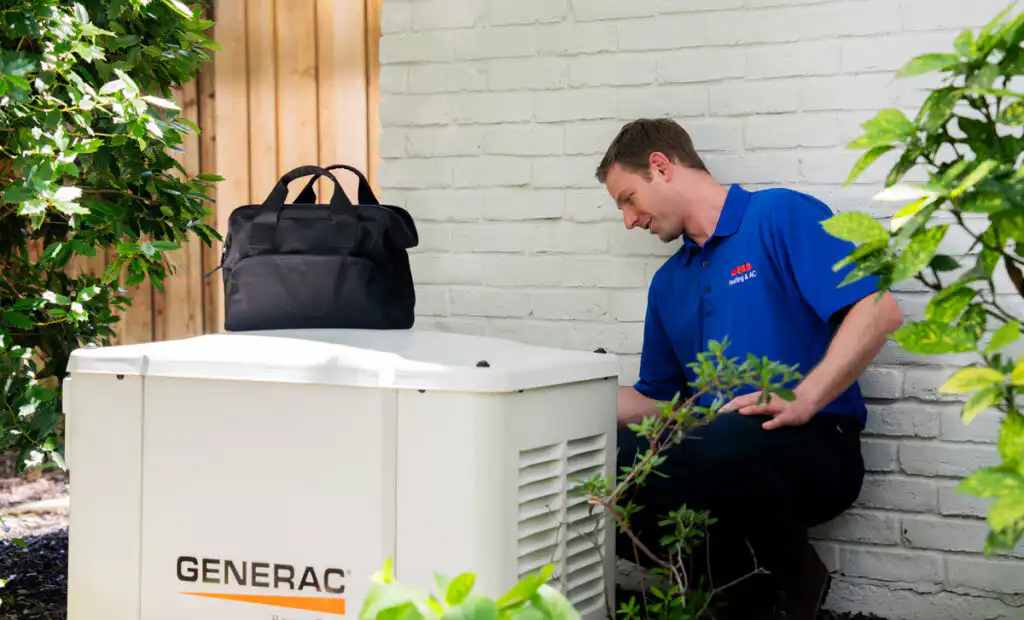
In Advance and the surrounding Davie County area, outdoor units sometimes ingest red clay dust and debris from nearby construction and disturbed soil.
Davie County has seen significant residential development in recent years, and that grit can work into fan blades or motor housings, causing noise before it causes damage.
In older Greensboro neighborhoods like Fisher Park, Lindley Park, and Westerwood, a banging or vibrating noise sometimes traces back to aging galvanized ductwork rather than the equipment itself.
Either way, a noise that's new deserves a look.
How Does High Piedmont Humidity Strain Your Outdoor Unit?
The Triad's summer humidity, often reaching 70 to 90 percent on the worst days, makes your outdoor unit's job significantly harder. The condenser coil sheds heat by pushing it into the outdoor air, and when those fins are dirty, bent, or blocked, heat transfer stalls. In high humidity, a fouled condenser works even less efficiently because the air it's exhausting into is already saturated. The compressor compensates by running harder and hotter.
That means longer run times and a Duke Energy bill that reflects it. It also means faster wear on the capacitor and contactor, two components that fail more often in systems that run harder than they should. Keep vegetation at least a couple of feet back from the outdoor unit on all sides; Greensboro's summer growth can close off that clearance faster than you'd expect.
When Should You Stop DIYing and Call a Greensboro Professional?
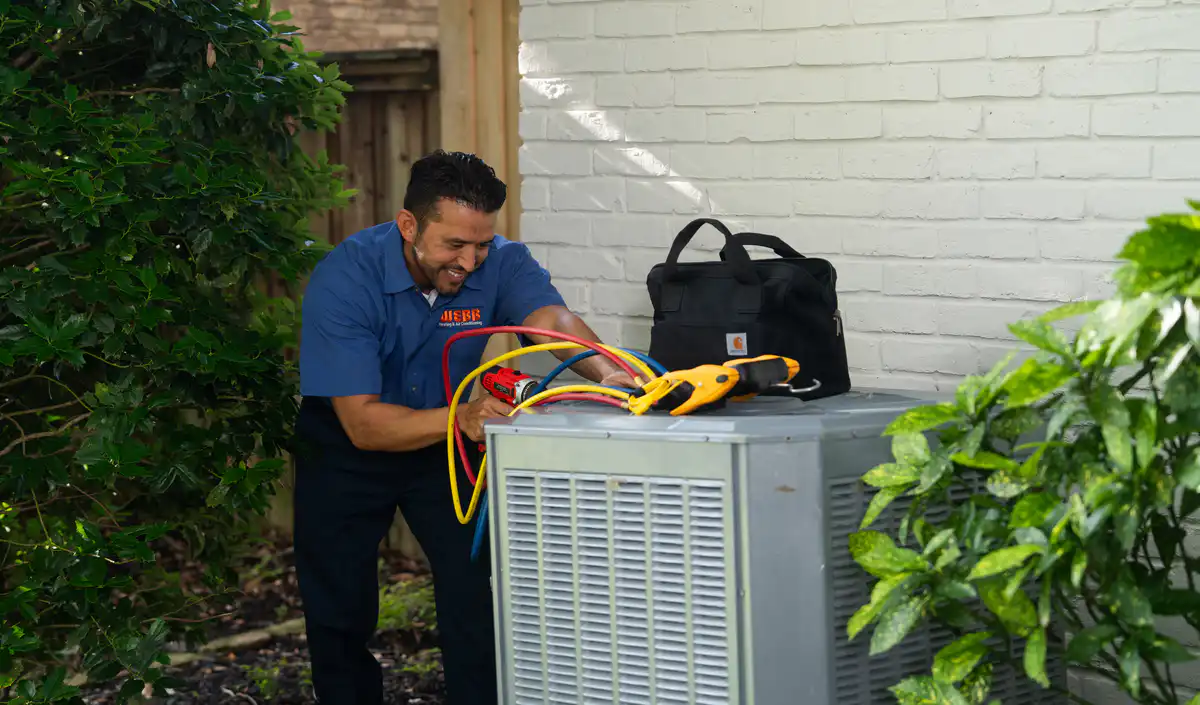
Some maintenance tasks are genuinely homeowner-friendly: changing the filter, flushing the condensate line with a cup of vinegar, clearing debris from around the outdoor unit. These are worth doing.
Others are not DIY territory. For example:
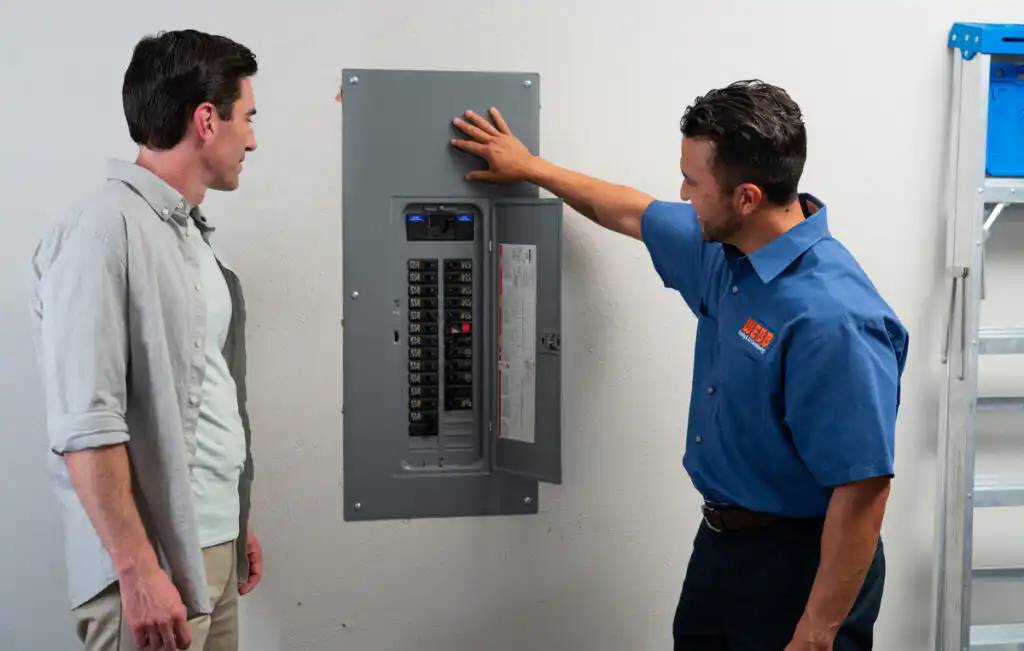
- Electrical Risks: Opening the electrical service panel or working inside the disconnect box carries real shock risk and can void equipment warranties. A clicking capacitor holds a charge even when the system is off.
- Refrigerant Handling: Adding refrigerant, or "recharging" an AC, requires EPA 608 certification, and adding it without finding and fixing the leak first just delays the problem.
When a minor issue needs a professional eye, Webb's AC repair team has been diagnosing and fixing Triad systems for 47 years. For homeowners who want to stay ahead of problems rather than react to them, Webb's Home Service Agreements provide scheduled maintenance visits that catch the small stuff before it compounds.
Frequently Asked Questions
Why is my AC not blowing cold air?
The most common causes are a dirty air filter restricting airflow, a refrigerant leak reducing the system's cooling capacity, a frozen evaporator coil, or a failing compressor. Start by checking the filter. If it's clean and the system still isn't cooling, the diagnosis requires a technician. Refrigerant and compressor issues aren't visible or measurable without equipment.
Won't tons of maintenance appointments be more expensive than one repair?
The math usually runs the other way. A maintenance visit catches a $15 capacitor before it takes out a $1,200 compressor. Condensate drain flushes prevent water damage that costs far more than the service call. Regular maintenance also extends equipment lifespan, which means AC replacement gets delayed rather than forced by a breakdown.
My AC smells musty — is that a problem?
A musty smell typically means mold or mildew on the evaporator coil or in the drain pan. In the Triad's humid climate, this is common and worth addressing. A dirty coil spreads those particles through every room every time the system runs. Coil cleaning and drain pan treatment are part of a standard tune-up.
My AC keeps starting and stopping — is that a problem?
Short cycling is a problem. It wears down electrical components faster than normal operation, reduces efficiency, and usually signals an underlying issue: an oversized system, a refrigerant leak, a failing thermostat, or a dirty coil. It won't resolve on its own and tends to get worse over time.
Does Your Greensboro Home Need AC Repairs? Call Webb Today.
Small problems become expensive ones when they're ignored through a Piedmont Triad summer. Webb Heating, Air Conditioning & Electrical has been serving Greensboro, Advance, and the surrounding Triad communities since 1978. Three generations of family ownership, NATE-certified technicians, and a track record Triad homeowners can check for themselves in our Reviews.
Contact us today or call us at (336) 439-6150 to schedule an appointment! Ask about financing options if you're facing a repair or replacement that wasn't in the budget.
Schedule Online(336) 439-6150Share this article