



Blog
Do Surge Protectors Protect Against Lightning? Make Sure Your North Carolina Home Is Storm Ready.
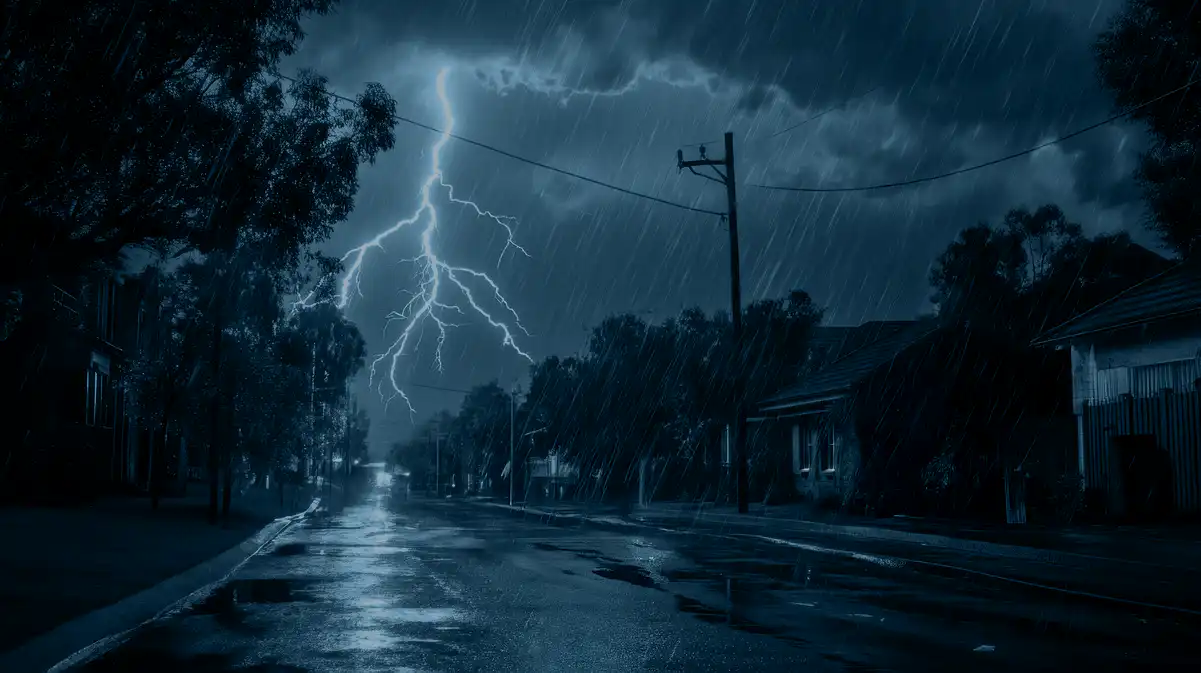
Summer afternoons in the Piedmont Triad follow a familiar script: clear skies in the morning, then a fast-moving line of thunderstorms rolling down the I-40 corridor by mid-afternoon. Those storms produce dense cloud-to-ground lightning, and every homeowner with electronics worth protecting should understand the answer to this question: do surge protectors protect against lightning?
Schedule Online(336) 439-6150Surge Protection Lightning Protection Summary
- No surge protector can stop a direct lightning strike, but direct hits are rare. Most storm damage comes from indirect surges traveling through utility lines, and those are preventable.
- Piedmont Triad homes face higher indirect surge risk than most. Duke Energy's overhead lines in older Greensboro neighborhoods and EnergyUnited's rural tap lines in Davie County both carry surge exposure directly into homes.
- Standard power strips only protect what's plugged into them. A whole-home surge protector at the panel covers everything, including hardwired HVAC equipment a power strip can never reach.
- Layered protection works best: a panel-level device for external grid surges, plus point-of-use strips for sensitive electronics.
- Whole-home surge protector installation requires a licensed electrician to maintain code compliance and equipment warranties.
Table of Contents
- The Truth: Can a Surge Protector Handle a Direct Lightning Strike?
- How Lightning and Power Surges Threaten North Carolina Homes
- Whole-Home Surge Protection vs. Standard Power Strips: What's the Difference?
- How to Get Your North Carolina Home Storm Ready
- Does Your Home Need Electrical Storm Protection?
The Truth: Can a Surge Protector Handle a Direct Lightning Strike?
No. A direct lightning strike can carry millions of volts, and no standard surge protector is rated to handle that kind of energy. If lightning strikes your rooftop, a nearby power pole, or a transformer on your street, the voltage overwhelms any protection device downstream. Can a surge protector protect against lightning at all, then? Yes, for the far more common indirect strike threat.
Direct hits are relatively rare, though. The more common threat is the indirect strike: lightning hitting a utility transformer several miles away, or striking the ground near overhead power lines, sending a residual voltage spike down those lines and into homes on the grid.
Those surges are large enough to damage sensitive electronics, degrade appliance components over time, and fry hardwired HVAC equipment. They are also exactly what whole-home surge protectors are designed to stop.
That distinction between direct and indirect is what determines whether your current protection is adequate.
How Lightning and Power Surges Threaten North Carolina Homes
The Piedmont Triad's summer weather creates a higher-than-average indirect surge risk. Hot, humid air collides with cooler afternoon air masses, generating intense storm lines that ride down the I-40 corridor between Greensboro and Advance. Every nearby strike is a potential surge event for homes on the grid.
The specific risk varies by utility.
Greensboro sits primarily on the Duke Energy grid, which mixes modern underground lines in newer subdivisions with older overhead lines running through neighborhoods like Fisher Park and Starmount Forest. Overhead lines are more exposed to nearby lightning.
Advance and rural Davie County are served by EnergyUnited EMC, a cooperative whose lines run past long stretches of timber. A strike on a pine tree miles from a home can send a surge down a tap line and directly into an electrical panel, with no visible storm required.
Power surges also originate inside the home. Every time a central air conditioner cycles on, the compressor draws a sharp current spike. Small compared to a storm surge, but it happens dozens of times a day and gradually degrades the microprocessors in appliances and smart systems.
Whole-Home Surge Protection vs. Standard Power Strips: What's the Difference?
Point-of-use power strips with surge protection work at the outlet level: they monitor voltage and divert excess energy to ground when a spike arrives. That covers whatever's plugged into them, the TV, computer, or gaming system, but nothing else. The refrigerator, HVAC system, and every hardwired appliance in the house sits outside that protection entirely.
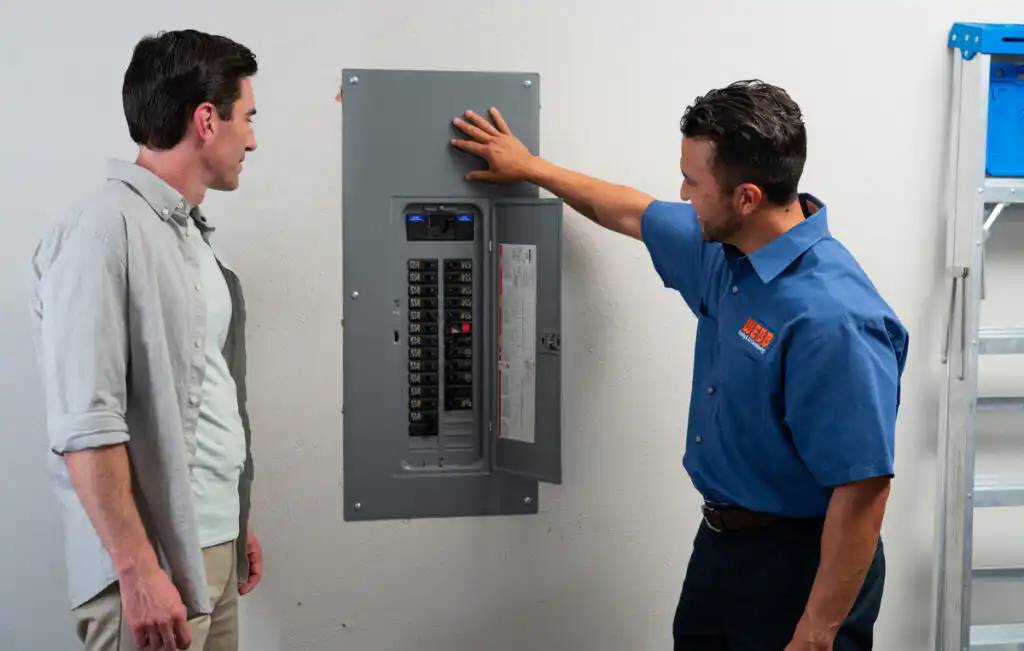
Whole-home surge protectors work upstream, mounted at the main electrical panel. When a surge arrives from the utility grid, it gets intercepted before it can distribute through household circuits. Every outlet, every hardwired appliance, and every piece of HVAC equipment benefits from a single installation.
Used together, the two approaches cover the full picture. The panel-level device handles external surges from the grid; point-of-use strips add a second line of defense for sensitive electronics and catch the smaller internal spikes that a whole-home device isn't designed to stop.
How to Get Your North Carolina Home Storm Ready
Three steps make the biggest difference for Triad homeowners heading into storm season:
- Unplug high-value items during severe storms. Physically unplugging sensitive electronics is the only defense against a direct hit. Panel-level devices and power strips alike have limits, so for irreplaceable equipment, disconnection is the safest move when a storm is directly overhead.
- Inspect older electrical infrastructure. Historic homes near downtown Greensboro and older properties in rural Advance may lack the modern grounding needed to shed excess voltage safely. Electrical repair work on aging panels is often the foundation that makes surge protection effective — a well-grounded system sheds excess energy; a poorly grounded one doesn't.
- Have whole-home surge protection professionally installed. Panel-level surge protectors require a licensed electrician to install correctly. Improper installation can void equipment warranties and leave the device out of compliance with North Carolina electrical code.
None of these steps requires a major time investment, and together they close off the main vulnerabilities that Triad homes face during a typical summer storm season.
Does Your Home Need Electrical Storm Protection?
When storm season arrives in the Triad, the question isn't whether a surge will eventually reach your home. It's whether your home is ready. Webb Heating, Air Conditioning & Electrical has been serving Greensboro, Advance, and the Piedmont Triad for 47 years. As a family-owned company with NATE-certified technicians and licensed electricians on staff, Webb handles surge protection installation, panel assessments, and electrical inspections across Guilford and Davie counties. See what neighbors have said on our reviews page.
Contact us today to schedule a surge protection assessment. Home Service Agreements include annual electrical inspections to keep your home prepared before storm season, and financing options are available for panel upgrades and whole-home surge protection. Contact us online or call us at (336) 439-6150 to schedule an appointment!
Schedule Online(336) 439-6150Frequently Asked Questions
Frequently Asked Questions
Unplugging the devices connected to a power strip is the only foolproof protection against a direct lightning strike. A point-of-use strip can handle indirect surges traveling through utility lines, but a direct hit nearby can overwhelm it. For computers and other high-value electronics, unplugging during a storm directly overhead is a reasonable precaution. A whole-home surge protector at the panel continues working regardless; the recommendation to unplug applies to devices on power strips, not to the panel-level device.
Most whole-home surge protectors last roughly 5 to 10 years, but actual lifespan depends on how many surge events the device has absorbed. Each surge depletes some of its protective capacity, and homes with frequent lightning activity may wear through a device faster. A licensed electrician can test whether an existing device is still providing meaningful protection.
Yes. A panel-level device covers hardwired equipment throughout the home, including the outdoor condenser unit. Modern HVAC systems with variable-speed compressors and inverter-driven components are especially sensitive to voltage spikes, making surge protection more valuable than it was for older single-stage equipment. Panel-level protection significantly reduces the risk of control board and compressor damage from indirect grid surges.
Share this article