

Post-Storm Safety Highlights:
- Webb's licensed electricians and NATE-certified technicians are available for emergency post-storm inspections across the Piedmont Triad
- A quick pre-restoration check can prevent a fried HVAC circuit board or a damaged well pump before power ever comes back on
- Webb offers 24/7 emergency service for electrical smells, tripped panels, and HVAC systems that won't restart
Table of Contents:
- Step 1: The Exterior Perimeter Check
- Step 2: Inspecting for Water Intrusion
- Step 3: Checking HVAC & Appliance Status
- Step 4: The Electrical Panel & Breaker Audit
- Step 5: Smell Test & Gas Safety
- When to Call a Professional
A storm knocks out power somewhere along Wendover Avenue, and half of Greensboro spends the evening waiting in the dark for the lights to come back on.
That moment when power finally returns feels like relief, but it's actually the riskiest part of the whole outage. Electrical safety after storm damage starts before you ever touch a breaker, and a post-storm safety inspection can be the difference between a quick reset and a fried HVAC circuit board.
Step 1: The Exterior Perimeter Check
The most useful power restoration tips Winston-Salem and Greensboro homeowners can rely on start outside, not at the breaker panel.
Before you touch anything inside the house, walk the outside of your property first:
- Downed power lines: Stay at least 30 feet away from any line on the ground, and assume every line is live until the utility company confirms otherwise.
- Leaning or damaged poles: Report these to your utility provider rather than approaching them.
- Debris on the outdoor condenser: Mud, branches, or standing water on your HVAC condenser means it should stay off until it's been cleared and inspected.
If the exterior looks clear, move inside for the next check.
Step 2: Inspecting for Water Intrusion
Piedmont clay soil doesn't drain quickly, so heavy storm water often pools around outdoor equipment and seeps into crawlspaces long after the rain stops. Look down before you look up:
- Standing water near your furnace, air handler, or electrical outlets: stay out of that area and call a professional rather than investigating yourself
- Crawlspaces or basements near the Yadkin River, including parts of Advance and Bermuda Run, tend to hold water longer after a storm, since ground saturation near the river takes more time to recede than it does farther inland
- Water standing for more than a day: treat any nearby electrical equipment as off-limits until it's checked
Water intrusion is one of the most overlooked post-storm hazards in the Triad, and it's worth checking before you assume the storm damage was limited to what you can see from the yard.
Step 3: Checking HVAC & Appliance Status
Two things matter here, before and after power comes back:
- Before restoration: turn off major appliances, including your HVAC system, refrigerator, and washer. This prevents a surge overload the moment electricity comes back online.
- After restoration: wait about 15 minutes before slowly switching items back on one at a time.
That short delay gives the grid a chance to stabilize and lowers the odds that a restoration spike reaches your equipment at all.
Step 4: The Electrical Panel & Breaker Audit
The Triad rarely loses power across the whole grid at once the way a coastal hurricane knocks out entire regions. Storms here tend to cause pinpoint damage instead, with one falling branch taking out a single neighborhood line that comes back online with a voltage spike rather than a clean, steady restoration.
That instability is a common reason sensitive circuit boards in HVAC systems and smart appliances fail right after power returns rather than during the outage itself.
Before restoring power at your panel, check for:
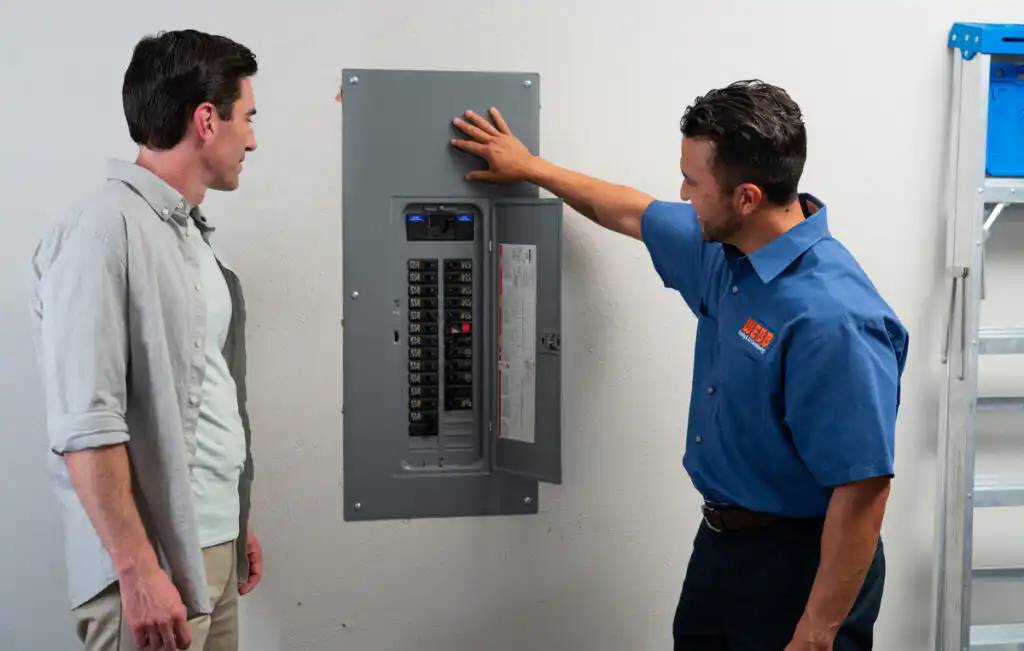
- Scorch marks or discoloration around the breaker panel
- Popping sounds or a burning smell coming from the panel itself
- Tripped breakers you can't explain: leave them off if you're not sure why they tripped
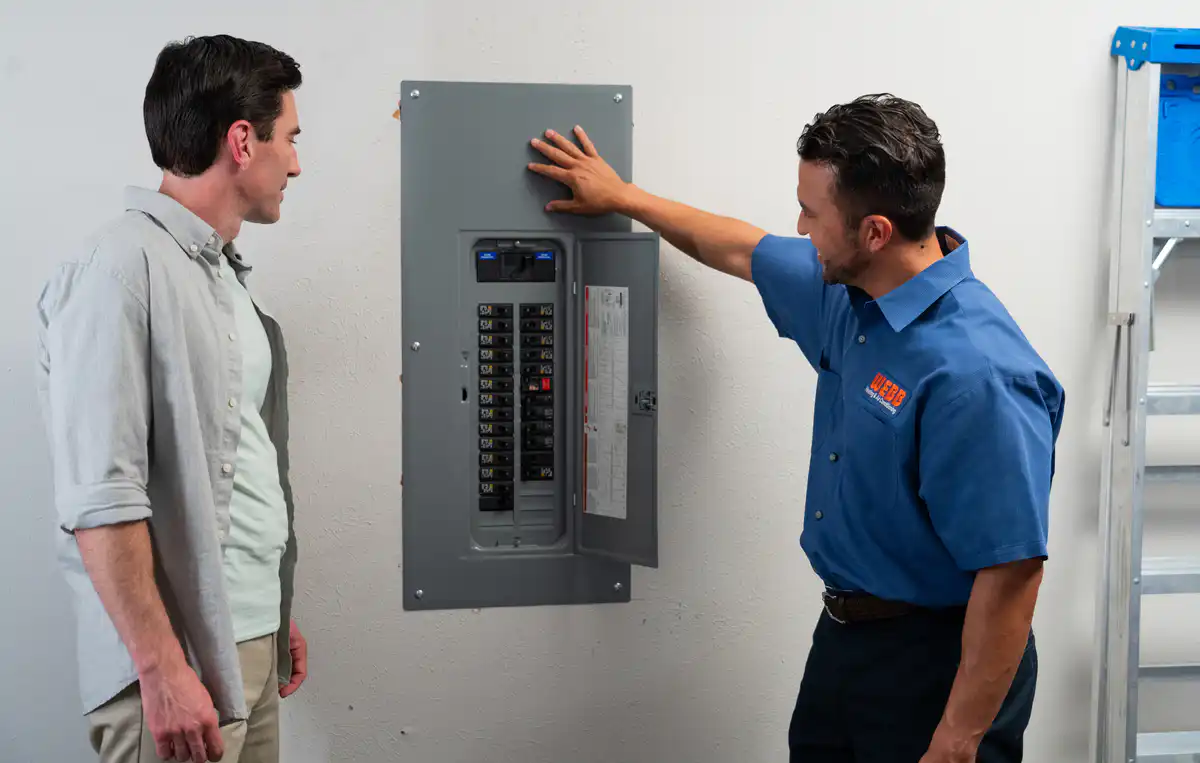
Any of these signs means it's time to call in Webb's electrical services team rather than resetting the panel yourself.
Step 5: Smell Test & Gas Safety
If you have gas appliances like a furnace or water heater, take a moment to check for a rotten egg smell before you do anything else. If you smell gas, leave the house immediately and don't flip any light switches on your way out, since even a small spark can ignite a leak. Call your gas utility or 911 from outside the home, not from inside it.
When to Call a Professional
If you need Webb HVAC storm help right away, the team is available 24/7. If you're unsure about an electrical smell, a scorched panel, or an HVAC unit that won't start, don't guess your way through it. That uncertainty is exactly who to call for electrical safety check after storm damage is meant for.
- On a private well? Check your well pump circuit before you restore power. This is common for homeowners in the rural areas around Advance and Clemmons, and a surged well pump control box means no water at all until it's repaired.
- Catching it early can save you from a far more expensive emergency repair down the line.
If a full inspection turns up damage beyond a simple reset, Webb's electrical repair technicians can get things running safely again.
Need Help Getting Power Back to Your Home?
Webb Heating, Air Conditioning & Electrical has spent 47 years handling storm season across the Piedmont Triad. That experience covers both sides of a post-storm inspection, the electrical panel and the HVAC system it powers. As a family-owned company now in its third generation, Webb's NATE-certified technicians and licensed electricians know the difference between a quick reset and a repair that needs a professional.
If you're dealing with storm damage, don't wait until small issues become expensive ones. Contact us online or call us at (336) 439-6150 today to schedule and appointment. Home Service Agreement get priority scheduling during storm season.
Still undecided? Check out what other Triad homeowners say in Webb's reviews, or ask about financing options if storm damage repairs are more than expected.
Schedule Online(336) 439-6150Frequently Asked Questions
Frequently Asked Questions
A humming sound after power returns often points to a capacitor or contactor that was stressed by a voltage spike during restoration. It's usually not an emergency, but it's worth having a technician check it before the system runs for extended periods, since a failing capacitor can eventually keep the unit from starting at all.
Only if it's installed with a proper transfer switch that prevents backfeed into the grid. Running a generator without one is a serious hazard to utility workers and can damage your home's wiring. It also introduces a carbon monoxide safety risk if the generator runs anywhere near doors, windows, or vents, so placement matters as much as the switch itself.
If you suspect damage to your electrical panel, HVAC system, or wiring, call an electrician first for a safety check. You can document the damage for your insurance claim once it's safe to be near the affected areas.
Leave the unit off and don't attempt to dry it out or restart it yourself. Standing water inside a condenser can mean anything from a minor cleanout to a damaged compressor, and running it before it's inspected risks turning a small problem into a much larger one.
Share this article