

Blog
Storm-Proofing the Triad: Why Whole-Home Generators are Essential for Piedmont Residents
Storm Proofing Generator Highlights
- Canopy-driven outages: Mature oaks and overhead lines mean even a routine Piedmont thunderstorm can knock out power to a single street for days, well outside of any widespread grid failure.
- All-systems protection: A whole-home standby unit keeps the well pump, HVAC system, and refrigeration running together, without the guesswork of a portable unit.
- Built for two extremes: The right system handles both a July heat wave and a January ice storm, sized to start high-load equipment like a heat pump without straining.
Table of Contents
- Why Portable Generators Are Only Half the Battle
- The "All-Systems" Advantage: Protecting Your Well, HVAC, and Food
- Customized Solutions for Historic Triad Homes
- The Webb Advantage: Total Home Electrical Integration
Ardmore and Irving Park are known for their mature oak and maple canopies, the kind of tree cover that keeps these Greensboro neighborhoods shady most of the year. That same canopy is why a routine afternoon thunderstorm can drop a large branch across a power line. One street can stay dark for days while utility crews focus on larger outages first.
It is not the dramatic, region-wide blackout homeowners picture when they think about storm damage. It is a smaller, more personal outage that can still mean a warm refrigerator, a dead well pump, and an HVAC system that will not run.
Why Portable Generators Are Only Half the Battle
A portable generator can feel like a reasonable backup until the power actually goes out.
Here are some of the obstacles you might face:
- Weather exposure: Running a portable unit safely means keeping it outside, dry, and away from windows and doors, which is difficult during the same storm that caused the outage.
- Manual refueling: Someone has to check fuel levels and refill the tank every few hours, often in the dark or in bad weather.
- Limited capacity: Most portable units can run a few lights and a refrigerator, but not a central air conditioner, furnace blower, or well pump at the same time.
- Carbon monoxide risk: A portable generator run too close to the house, or in a garage with the door cracked, can push dangerous CO levels into living spaces within minutes.
These are not flaws in cheaper models. They are the tradeoffs built into how portable generators work, and they are exactly what a whole-home generator Winston-Salem homeowners install is designed to solve.
The "All-Systems" Advantage: Protecting Your Well, HVAC, and Food
Standby systems are sized differently because they are built to run the whole house, not just a handful of outlets. Answering what kind of generator you need starts with adding up total electrical load: HVAC equipment, well pump, refrigeration, and everyday household circuits, well beyond a lamp and a phone charger.
- HVAC continuity: Heating and cooling keep running through the outage instead of shutting down until utility power returns.
- Well-pump backup: This matters most in rural stretches of Davie, Davidson, and Forsyth counties, including Clemmons and Advance, where losing power also means losing running water for toilets, showers, and washing hands.
- Food and medication refrigeration: Refrigerators and freezers stay cold long enough to protect groceries and any medications that need consistent temperatures.
A standby generator Piedmont Triad homeowners choose needs to handle both a mid-July heat wave and a mid-January ice storm without missing a beat. A unit that cannot carry a heat pump's startup wattage in freezing weather is a failure exactly when it is needed most.
Figuring out what kind of generator you need for your house also means accounting for that startup wattage. Equipment like a heat pump or well pump draws far more power in the first few seconds than it does once running. Because a correctly sized system is a bigger investment than a portable unit, Webb offers financing options to help spread out the cost.
Customized Solutions for Historic Triad Homes
Noise and yard space are usually the first concerns homeowners in older Triad neighborhoods raise.
- Sound level: Modern standby units run considerably quieter than older models, closer to the hum of a central air conditioner than an old gas generator.
- Footprint: Compact cabinet designs fit the tight side yards and setbacks common on historic lots.
- Placement planning: Webb's generator services team evaluates sound, sightlines, and any neighborhood association rules before choosing a spot, rather than defaulting to wherever is easiest to reach.
A properly planned Generac installation Greensboro homeowners in historic districts approve of respects both HOA guidelines and the character of the neighborhood. The goal is a storm-proof home Winston-Salem's historic districts like Old Salem can live with day to day, storm or not.
The Webb Advantage: Total Home Electrical Integration
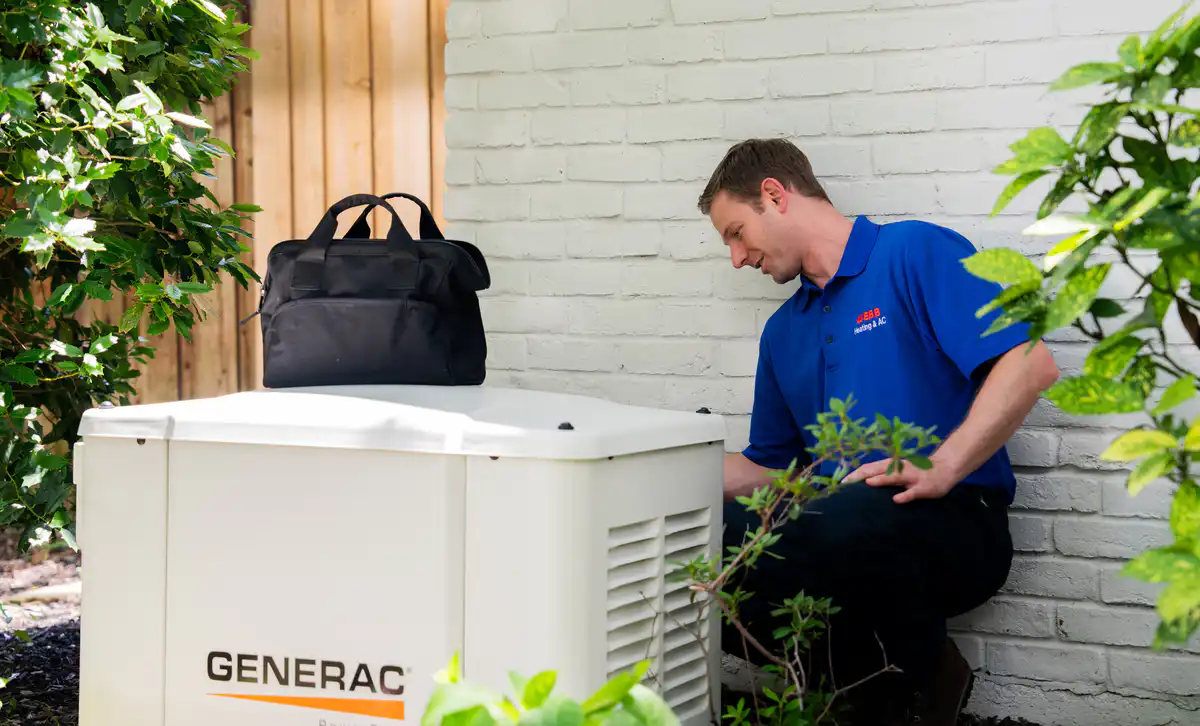
Webb Heating, Air Conditioning & Electrical has spent 47 years working on both sides of the panel, as a licensed electrical contractor and a factory-authorized Generac installer. That dual expertise shows up in a few concrete ways on a generator project:
- Load calculation: Webb's NATE-certified technicians calculate the home's full electrical load, including HVAC startup wattage, before recommending a unit size.
- Transfer switch installation: The automatic transfer switch and the generator go in as one connected job, not two separate contractors working around each other.
- Panel and wiring work: If an older home's panel needs attention before a generator can be added, Webb's electrical repair team handles it in the same visit.
A mismatched generator can trip on startup or fail to carry the load once the heat pump kicks on. This kind of coordinated planning is what prevents that. Beyond generator installs, Webb's electrical services cover the rest of a home's wiring needs as well.
Need Power For Your Home?
A whole-home generator means the Triad's canopy-driven outages, ice storms, and summer heat waves stop being emergencies. Webb has spent 47 years pairing electrical and HVAC expertise, so the system a technician sizes and installs accounts for the entire house, not just a portable unit's worth of power.
Contact us online or call us at (336) 439-6150 to schedule an appointment. Prefer to start with a few questions? We'll help you figure out the right size system before anything gets installed.
Read reviews from Triad homeowners who no longer worry when a storm rolls through.
Schedule Online(336) 439-6150Frequently Asked Questions (FAQ)
Frequently Asked Questions
An automatic transfer switch constantly monitors utility power. When it detects an outage, it signals the generator to start, then shifts the home's electrical load from the grid to the generator, usually within seconds. Once utility power returns, the switch shifts the home back and lets the generator cool down before shutting off.
Yes, but only if it is sized for it. Central HVAC systems draw significant startup wattage, especially heat pumps, so the generator needs to be sized around that load rather than the home's average electrical draw. This is a common gap in generators bought without a professional load calculation.
Industry estimates commonly put the resale bump from a professionally installed whole-home standby generator at around 3 to 5 percent of a home's value. This is strongest in markets, like the Triad, where outages are a known problem. It is not guaranteed to add a specific dollar amount, but a properly installed system is generally viewed as a genuine selling point rather than a luxury extra.
Most standby generators need a professional inspection once or twice a year, along with periodic oil and filter changes similar to a small engine. Homeowners on Webb's Home Service Agreements can have generator maintenance bundled with their regular HVAC visits so it does not get overlooked.
Share this article