NOW OFFERING ELECTRICAL SERVICES
Learn more about the services we provide.
How Long Does an AC Unit Last in Piedmont Triad Summers? 5 Tips to Extend Your AC’s Life
By mid-July, the Piedmont Triad makes its heat known. You feel it walking to your car after a Grasshoppers game, on the back nine at Bermuda Run, or just pulling weeds for twenty minutes in the backyard. When you finally get home and step inside, that first rush of cool air feels irreplaceable.
For homeowners in Greensboro, Advance, and the surrounding communities, knowing how long an AC unit lasts could be difference between a planned upgrade and an emergency replacement in the middle of a heat wave.
What Is the Expected AC Lifespan in North Carolina?
Most central air conditioning systems last between 12 and 15 years. That’s the national average. But how long is an AC’s lifespan in a place like the Piedmont Triad is a different question.
In milder climates, a well-maintained unit might push 18 to 20 years. Here, the combination of long cooling seasons, high humidity, and heavy spring pollen puts more cumulative stress on equipment. The Triad’s cooling season runs hard from late April through October. That’s nearly half the year of near-continuous operation before the system ever gets a rest.
There’s another factor specific to this region: many Triad homes run heat pumps rather than dedicated AC systems. Heat pumps handle both heating and cooling, which means they log mileage year-round instead of just summer. A heat pump that might otherwise last 15 years can age faster simply because it never fully stops working.
Your air conditioning system’s actual lifespan depends heavily on how it’s been maintained, which is where most homeowners have the most control.
5 Signs Your AC Might Be Aging
Age alone doesn’t tell the whole story. These are the signals worth paying attention to:
- Rising energy bills without a change in habits: If your utility bill is climbing but you haven’t changed your thermostat routine, the unit’s efficiency is likely declining. Older compressors and coils work harder to produce the same cooling output.
- Inconsistent temperatures room to room: This is especially common in older Greensboro homes in neighborhoods like Fisher Park and Irving Park, where original ductwork was sized for different equipment. An aging system that can’t keep up with the load will show it upstairs first.
- Coils caked with pollen or debris: Each spring, oak, pine, and maple pollen blankets the Triad from March through early June. That pollen packs into condenser fins and coils, forcing the system to work harder to move air and transfer heat.
- Strange sounds at startup: Clanging, screeching, or a hard mechanical thud when the system kicks on often points to motor bearings or a failing capacitor, components that tend to go after a decade of use.
- Frequent repair calls: One repair in a season is maintenance. Two or three in a summer is a pattern.
Any of these on their own warrants a closer look. Two or more together usually means it’s time to have a technician assess whether repair or replacement makes more sense.
Why Your AC Is Most Likely to Fail When You Need It Most
What Happens When Everyone Turns On Their AC at the Same Time?
The capacitor, which gives the compressor and fan motors the electrical kick they need to start — is particularly vulnerable after months of dormancy followed by sudden extreme heat demand. A weak capacitor that limps through a cool spring may fail entirely when the system is asked to run eight hours straight on a 95-degree day.
Why Most AC Systems Fail During the First Heatwave
Grid demand spikes during regional heat waves compound the problem. Slight voltage fluctuations during peak afternoon hours can cause an already-strained motor to draw more current than it should. For a unit pushing 12 or 13 years old, that combination of heat, electrical stress, and component fatigue is often the breaking point.
The most common time for an AC system to fail isn’t during a routine afternoon; it’s the first genuinely hot day of the year, or the peak of a multi-day heat wave.
That’s exactly when you need it most: you’re coming in from the heat, the house should be a refuge, and instead the system either won’t start or runs without actually cooling. After sitting idle through a mild Triad winter, an air conditioner comes back to life with dust on the coils, possibly degraded capacitors, and lubricant that’s settled in the motor.
This is also why late August and September deserve extra attention in the Greensboro area. The extended stretches of humidity and heavy rain that come with hurricane season keep systems running continuously, no overnight cool-down, no rest. That sustained load accelerates wear faster than any single hot afternoon.
5 Tips to Extend Your AC’s Life in the Triad
With consistent habits, you can genuinely extend AC lifespan and stay ahead of the most common failure points.
Tip 1: Change Your Filter Every 30 Days During Peak Season
For standard 1-inch filters, the Triad’s long cooling season means more frequent changes than most national guidelines suggest. Spring pollen from the area’s dense tree canopy and red clay dust that kicks up in drier stretches can load a filter fast. A clogged filter restricts airflow and forces the blower motor and coils to compensate.
Tip 2: Give the Outdoor Unit Room to Breathe
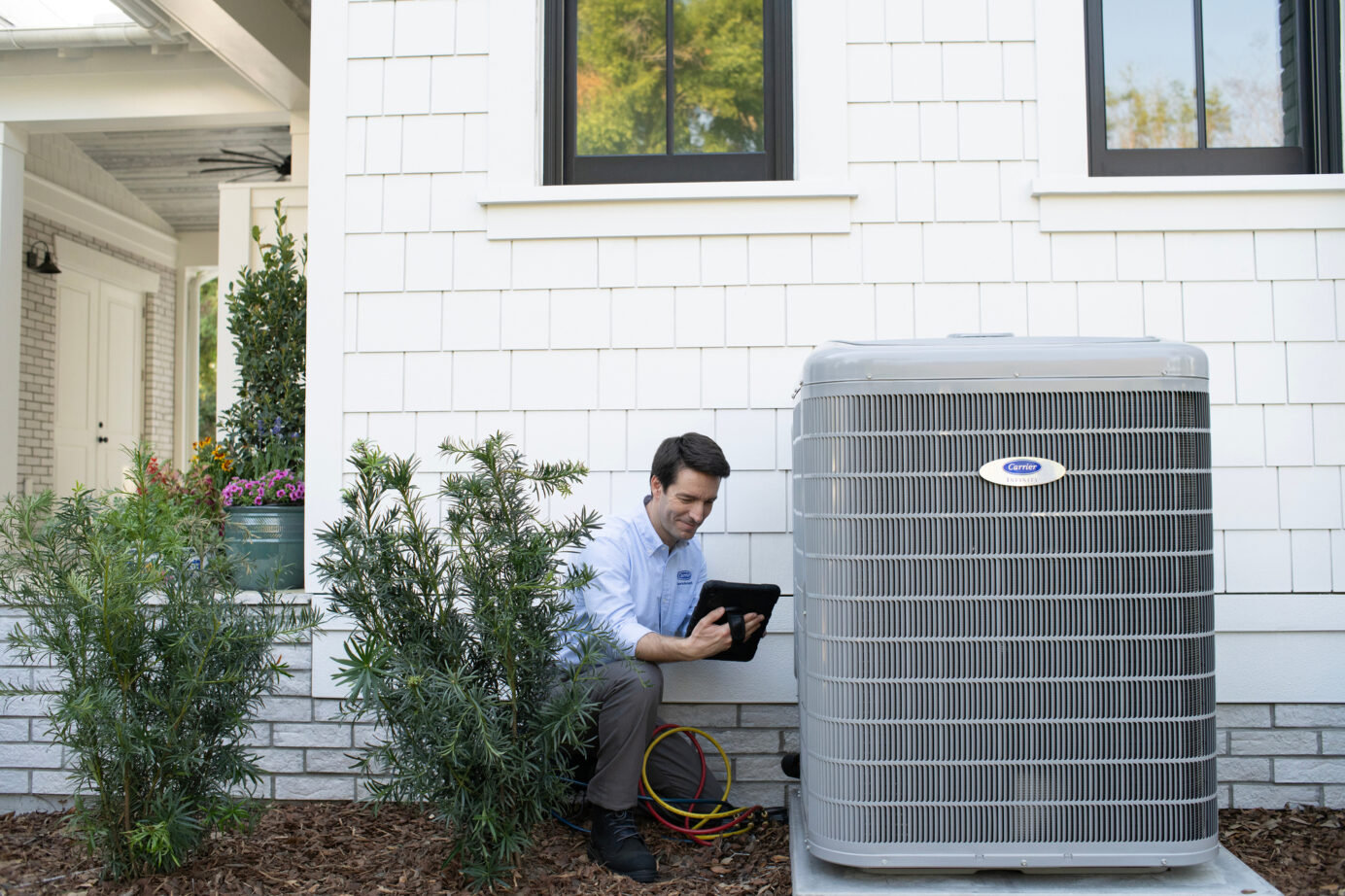
Keep at least 18 to 24 inches of clearance around the condenser on all sides. Fast-growing shrubs and ornamental grasses that thrive in Triad summers can restrict airflow and trap heat against the unit. Rinse the condenser fins with a garden hose at the start of the season to clear out pollen and debris; just turn the unit off first.
Tip 3: Use a Smart Thermostat Strategically
A smart thermostat like an Ecobee or Nest prevents the short-cycling that puts unnecessary wear on the compressor. If you’re out for the evening — catching a game downtown or visiting Old Salem in Winston-Salem — set a higher setpoint rather than turning the system fully off. A house that’s coasted to 80 is far easier to cool than one that’s hit 88.
Tip 4: Don’t Wait on Small Noises
A failing capacitor typically costs $150–$400 to replace. The compressor it protects can cost $1,500 or more, and at that point, replacing the whole system is often the smarter financial call. Strange sounds at startup are worth a service call, not a wait-and-see.
Tip 5: Schedule Professional Maintenance Twice a Year
This is the single highest-return habit for extending your system’s life. A trained technician catches refrigerant issues, electrical faults, and coil contamination before they compound. Webb’s air conditioning maintenance plan covers bi-annual tune-ups — spring before the cooling season, fall before heating season — keeping your system running efficiently and protecting any remaining manufacturer warranties.
Frequently Asked Questions
Does the humid Greensboro air affect my AC’s life?
Yes, in a real way. High humidity makes your AC work harder because it has to remove moisture from the air in addition to lowering the temperature. In the Triad, where summer dew points regularly hit the upper 60s and low 70s, that added load accumulates over time. Systems in this region typically show wear earlier than equivalent units in drier climates, which makes consistent maintenance more important here than national averages suggest.
Should I replace my AC if it’s 10 years old?
Not necessarily. A 10-year-old system that has been well-maintained, runs efficiently, and uses current refrigerant has meaningful life left. The calculus changes if you’re seeing frequent repairs, rising utility bills, or a system still running R-22 refrigerant, phased out of production in 2020 and now expensive and scarce. At that point, the cost of keeping the old unit running often approaches or exceeds the long-term savings of a new, efficient system.
Is it better to repair or replace an R-22 (Freon) unit?
For most homeowners, replacement is the better call. R-22 was phased out of U.S. production in 2020, and the remaining supply has made it expensive, often $50 to $150 per pound or more, depending on availability. If an R-22 system develops a refrigerant leak or a major mechanical failure, the repair cost plus refrigerant can quickly exceed what a new system would run. A new unit also comes with current efficiency ratings and a fresh warranty.
Need to Replace Your AC?
If your system is approaching 10 to 12 years old, or if you’ve noticed any of the warning signs above, it’s worth having a technician take a look before the next heat wave arrives.
Webb Heating & Air Conditioning has been serving the Piedmont Triad since 1978, and our NATE-certified technicians know what the local climate does to equipment over time. Whether you need a tune-up, a repair, or an honest assessment of whether it’s time to replace, we’ll give you a straight answer.
Contact us today or call (336) 439-6150 to schedule an appointment. You can also explore our financing options or read what Triad homeowners are saying in our reviews.