



Blog
When Should You Replace Your Air Conditioner, a North Carolina Guide

Knowing when to replace your air conditioner is one of the harder calls a Piedmont Triad homeowner will face. This guide covers what to watch for, when to act, and why spring is the smartest window to do it.
Schedule Online(336) 439-6150Spring HVAC Replacement Summary
- AC units in the Piedmont Triad typically last 12–15 years due to the region's long cooling seasons, high humidity, and heavy pollen load
- Five specific signs signal that repair is no longer the right answer: sticky air, rising energy bills, refrigerant top-offs, noisy operation, and short-cycling.
- Replacing before a breakdown gives you more equipment choices, better pricing leverage, and time to plan financing
- Spring is the ideal installation window: more scheduling flexibility, full inventory, and time to break in the system before the first 90-90 day
- New SEER2 systems can cut cooling costs by up to 40% compared to a 10 SEER unit from a decade ago
Table of Contents
- The Piedmont "Shelf Life": How Long Does an AC Last in NC?
- 5 Signs Your Triad Home Is Ready for a New AC
- Why Planning Your AC Replacement Early Gives You More Control
- Spring HVAC Replacement: More Options, Less Stress
- The SEER2 Factor: What North Carolina Homeowners Need to Know
- The Webb Advantage: Integrated HVAC & Electrical Expertise
- Frequently Asked Questions
The Piedmont "Shelf Life": How Long Does an AC Last in NC?
Nationally, a well-maintained air conditioner can last 15–20 years. In the Piedmont Triad, that number is shorter. If your unit was installed before 2012, it's at or past the reliable service threshold for this region. That doesn't mean it will fail tomorrow, but it does mean repair decisions deserve a harder look.
Systems here typically run nearly non-stop from May through September, and Greensboro-area units in particular spend months fighting the region's oak and pine pollen, which coats coil fins with a waxy residue that restricts airflow and accelerates wear. The humidity load is already heavy at 7 AM before the day has started. Most Triad homeowners can expect reliable service life of 12–15 years with regular maintenance, meaningfully shorter than the national average.
What are 5 Signs Your Triad Home Is Ready for a New AC?
Knowing when to replace rather than repair is the harder call. These are the five signs that tip the balance toward replacement.
- The "573" Rule: Multiply the repair cost by the age of the unit. If that number exceeds $5,000, replacement tends to be the smarter investment. A $400 repair on a 14-year-old system clears that threshold. Use it as a rule of thumb, not a hard formula, but it's a reliable starting point.
- Rising Energy Bills: A steady climb in kilowatt-hour usage compared to the same period last year, without a change in how you use the system, signals a loss of efficiency. An aging system works harder to hit the same setpoint, and you pay for every extra hour it runs.
- The Humidity "Lag": The air coming from the vents is cool, but your Advance or Greensboro home still feels sticky. This is often a sign the system is short-cycling or losing capacity. It hits the temperature target without completing a full dehumidification cycle.
- Frequent R-410A Top-Offs: R-410A refrigerant is being phased out and new production has ceased. If you're topping off a leak regularly, you're spending money on a refrigerant that's increasingly scarce and expensive, in a system that will eventually need replacement anyway.
- Noisy Operation: Squealing or grinding noises that wake you up in a Sherwood Forest or Fisher Park home at midnight aren't just annoying. They're symptoms of failing bearings or mechanical wear that often signal the system is near the end of its reliable life.
Any one of these on its own warrants a conversation with a technician. Two or more together usually means the math favors replacement.
Why Planning Your AC Replacement Early Gives You More Control
A July breakdown doesn't give you options. When an AC fails during a heat emergency, the decision is driven by whatever is available and whoever can get there fastest. That's rarely the outcome that serves you best.
Early planning changes the dynamic entirely. You can take time to evaluate equipment, compare efficiency ratings, and understand what load calculation your home actually needs, rather than taking what's in stock. It also opens the door tofinancing options that are much harder to think through clearly when it's 95 degrees inside and you have a household to cool.
Why Planning Your AC Replacement Early Gives You More Control comes down to this: the homeowner who plans in March or April makes a better decision than the one forced to decide in July.
Spring HVAC Replacement: More Options, Less Stress
April is the ideal installation window in the 336, and there are three practical reasons why.
- The "Shoulder Season" Benefit: HVAC crews have more scheduling flexibility in April than in peak season. That means more time for a thorough whole-home audit before installation, not a rushed job squeezed between emergency calls.
- Inventory Availability: You get your pick of the latest high-efficiency models, including heat pumps, dual-fuel systems, and traditional AC, before the mid-summer supply chain tightens. Equipment that's readily available in April may be backordered by June.
- The "Break-In" Period: A system installed in spring has weeks to be calibrated and dialed in before the first 90-90 day hits the 336 area code. If there's an issue with the installation or the equipment, you want to find it in mild weather, not during a heat wave.
Spring HVAC Replacement: More Options, Less Stress is the consistent experience of homeowners who plan ahead rather than react.
The SEER2 Factor: What North Carolina Homeowners Need to Know
As of January 2023, all new residential AC equipment is rated under the SEER2 standard, a testing methodology that better reflects real-world installation conditions. For homeowners, what matters is what it means for efficiency and cost.
For Greensboro and Winston-Salem homeowners replacing an older 10 SEER unit with a new 16+ SEER2 system, the cooling cost reduction can reach up to 40%. The Piedmont's long cooling season amplifies that number. More months of runtime means more months of savings. A system that runs from May through September generates meaningful returns on the efficiency investment over its lifespan.
The Webb Advantage: Integrated HVAC & Electrical Expertise
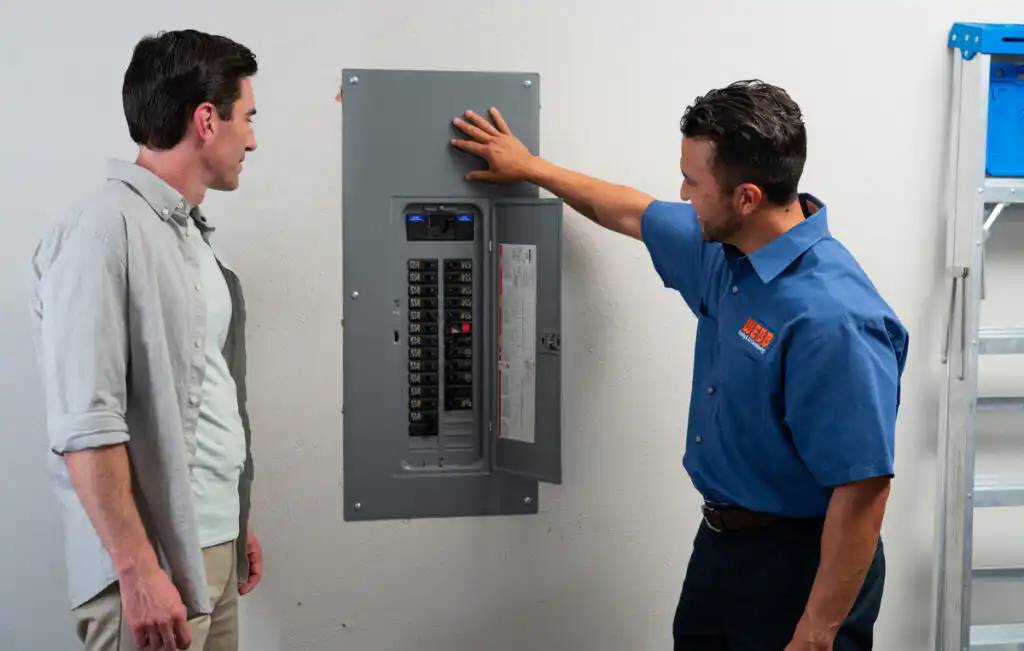
Most HVAC companies handle the equipment side of a replacement. Webb Heating, Air Conditioning & Electrical handles both sides. As a licensed electrical contractor, Webb ensures the home's panel can support the new high-efficiency load before installation, covering Advance, Greensboro, and the broader Triad, without requiring a separate contractor visit.
Webb has been installingair conditioning systems in this region since 1978, from the established neighborhoods of Starmount and Oak Ridge to the older homes in Sherwood Forest. That kind of local tenure means the team understands what each home and each neighborhood's housing vintage actually demands from a new system. See what Triad homeowners say on theReviews page.
Frequently Asked Questions
Is it worth repairing a 12-year-old AC unit in Greensboro?
It depends on the repair. Apply the 573 rule: multiply the repair cost by the unit's age. If the result clears $5,000, replacement tends to deliver better value than pouring money into aging equipment.
A 12-year-old system in Greensboro is at the low end of the Piedmont's typical reliable service range, so a major repair involving the compressor, coil, or refrigerant system warrants a serious replacement conversation before signing off on the work.
How long does a typical AC replacement take in the Triad?
Most residential replacements are completed in a single day. A standard swap of outdoor condenser and indoor air handler typically takes four to six hours for a prepared crew. More complex installations involving electrical panel work, ductwork modifications, or a transition from a different system type may run longer. Webb'sAC Replacement page covers what the process looks like from assessment through commissioning.
How do I know if I need a repair or replacement?
Start with the 573 rule as a baseline. Then consider the full picture: how old is the system, how often has it needed service, is it still cooling and dehumidifying effectively, and is it using a refrigerant that's being phased out?
A technician can give you an honest assessment of both options. Webb's approach is to present the repair cost and the replacement cost side by side, including efficiency projections, so the homeowner can make the decision that fits their situation.
Don't Wait on Replacing Your Unit. Let Webb Help.
An aging AC doesn't usually fail cleanly. It fails at the worst possible moment, mid-summer, mid-heatwave, with limited options. The homeowners who fare best are the ones who see the signs early and act before the season forces their hand.
Webb Heating, Air Conditioning & Electrical has been helping Triad homeowners make that call since 1978. If you're not sure whether repair or replacement is the right answer, start with a system assessment.
Whether you're in a mid-century Fisher Park bungalow, a newer Davie County build, or anywhere in between, the team can get you that assessment and, if it makes sense, get a new system in before the 90-90 days arrive.
Contact us today or call us at (336) 439-6150 to schedule an appointment!
Schedule Online(336) 439-6150Share this article