

Furnace Installation & Replacement
Furnace Installation & Replacement in Greensboro and Advance, NC
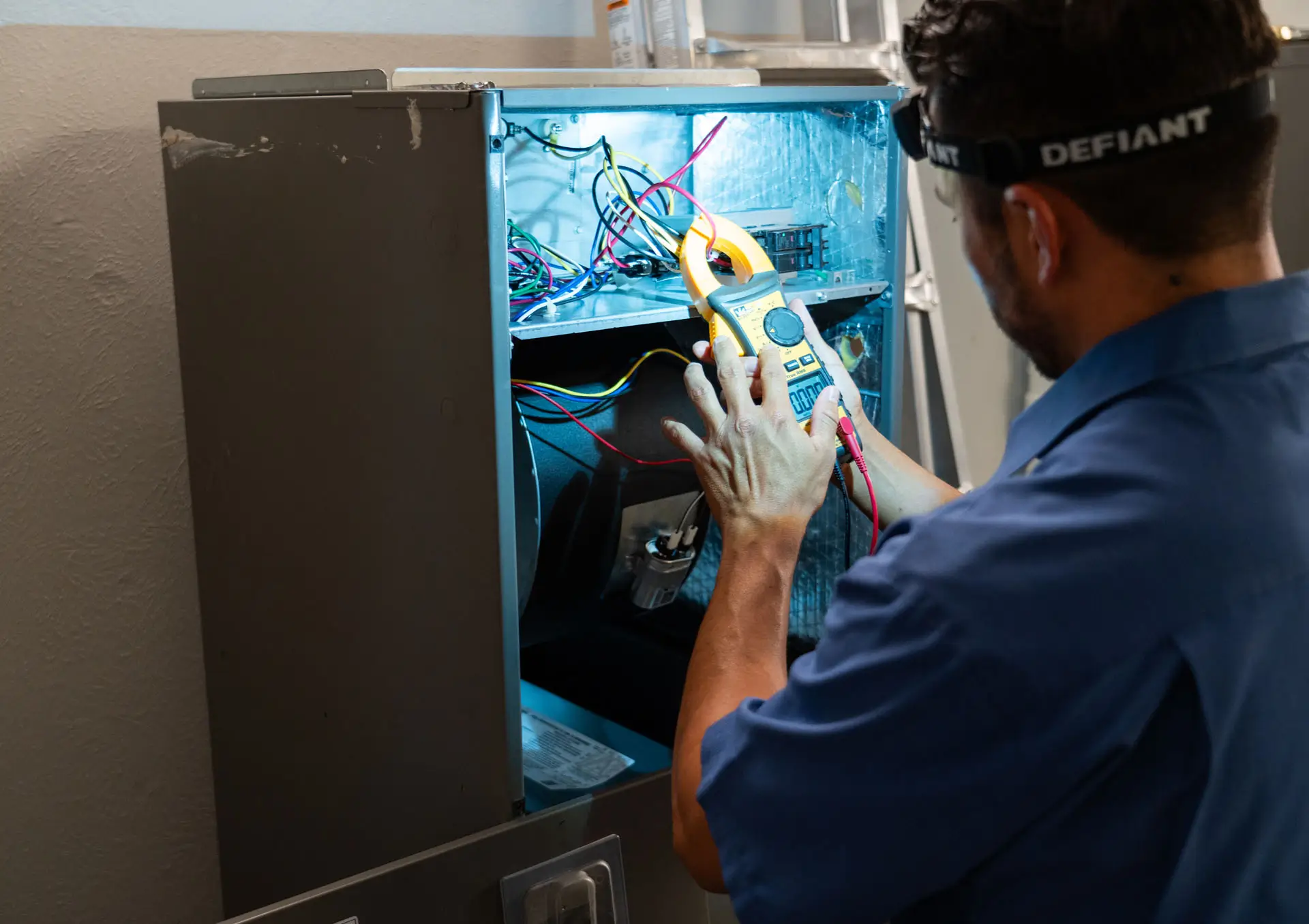
Furnace installation puts a furnace into a home that doesn't have one or into a new heating setup, while replacement swaps out one that's failing. We handle furnace installation in Greensboro, NC, Advance, and across Guilford and Davie counties. Every recommendation starts with your home's heating needs, not the size of the old unit.
Plan your furnace installation project in Greensboro, NC with Webb. Request an estimate consultation online.
Is It Time to Replace Your Furnace?
A furnace replacement in Greensboro or Advance often starts with a repair visit that turns up a bigger problem.
Here are a few signs that deserve a closer look:
- Repeated breakdowns: Several repair calls in a season or two suggest parts are wearing out together. A pattern of service calls matters more than any single repair.
- Uneven heating: Rooms that won't warm up can point to a struggling furnace. Ducts, insulation, or thermostat placement can cause the same problem, so it's worth diagnosing first.
- Rising operating costs: Bills that climb without a change in rates or usage can mean the furnace is losing efficiency. Comparing a few winters of bills shows whether it's a trend.
- Major repair findings: A failed heat exchanger, control board, or blower motor puts the repair-or-replace question on the table. A cracked heat exchanger is also a safety concern, since it can let combustion gases into the airflow.
Each of these symptoms calls for a diagnosis first, because some have simpler fixes. When replacement is on the table, we compare the repair cost, the furnace's condition, any safety findings, and how long you plan to stay in the home.
Age matters, but it doesn't decide on its own. Many gas furnaces last roughly 15 to 20 years, and our guide on how long HVAC systems last goes into more detail.
Choosing a Furnace for Your Greensboro Home
The right furnace depends on your fuel options, how much heat the house needs, the venting and wiring already in place, and your budget.
Not every Triad home has a natural gas line, especially outside city limits, so fuel is often the first decision:
- Gas furnaces: Where natural gas is available, gas furnaces are the most common choice, in both standard and high-efficiency models. Homes without a gas line sometimes use propane, which many gas furnaces can burn after a conversion.
- Electric furnaces: Electric furnaces need no gas line or flue, which simplifies installation, but they often cost more to run than gas. They also need a large dedicated circuit, so panel capacity is part of the plan.
- Oil furnaces: Some older and rural homes still heat with oil from a tank on the property. Replacing an oil furnace means checking the tank, fuel lines, and chimney along with the furnace itself.
We'll walk through the trade-offs of each fuel for your home, and you can read more about our furnace services before your visit.
Sizing, Efficiency, and System Compatibility
A furnace should match how much heat your home actually loses, not the size of the one it replaces. Our heating-load assessment looks at insulation, windows, layout, and air leakage, along with any changes since the old furnace went in, like an addition or new windows.
Bigger isn't better. Piedmont winters are mild on most days, so an oversized furnace heats the house fast, shuts off, and starts again, which wears parts and leaves rooms uneven.
Efficiency is measured by AFUE, the share of fuel that becomes usable heat. Standard furnaces sit around 80 percent, while high-efficiency condensing models run 90 percent or higher, though actual savings depend on your fuel cost and usage. Before we recommend a model, we check how it will work with what's already in your home:
- Ductwork: A new furnace's blower has to move air through your existing ducts, so we check their size, condition, and leaks. Undersized or leaky ducts can hold back comfort and efficiency even with new equipment.
- Venting: Condensing furnaces vent through plastic pipe and need a drain for condensate. If the old furnace shared a chimney with a gas water heater, the water heater may then need a liner or new venting.
- Electrical capacity: Electric furnaces need a large dedicated circuit, and gas furnaces need proper power for the blower and controls. We confirm your panel can handle the new load.
- Thermostat: Two-stage and variable-speed furnaces work best with a thermostat that can control those stages. We'll tell you whether your current thermostat works or needs an upgrade.
- Configuration: Furnaces are built to push air up, down, or sideways depending on where they sit. Our post on upflow versus downflow furnaces covers how that's matched to your space.
Catching these issues during the assessment keeps them from turning into surprises on installation day.
What Happens During Furnace Installation?
How well your furnace is installed matters for its longevity and efficiency over time. Here's how a project moves from the first visit to the first heat:
- Home assessment: We measure the heating load, look at the existing furnace, ducts, venting, and electrical service, and ask how the house heats today.
- Options and scope: We explain the equipment that fits, what each option includes, and any added work, such as venting or duct changes, in a written estimate.
- Scheduling: Once you choose, we schedule the installation and pull any required permits.
- Removing the old furnace: For replacements, we disconnect and remove the existing furnace and prepare the space for the new one.
- Installing the new furnace: We set the furnace and connect the fuel supply, venting, ductwork, wiring, and thermostat, adding a condensate drain if the model needs one.
- Verifying operation: We start the system, check combustion, venting, airflow, and safety controls, and show you how to use the thermostat and change the filter.
A straight swap into the same space, with the same fuel and venting, is the simplest job. Projects that switch fuel, move the furnace, add venting, or modify ducts take more planning and time, and your estimate will spell that out.
What Affects Furnace Installation Cost and Timing?
Every installation is priced to the home, and these factors move the number most:
- Equipment capacity and efficiency: Larger furnaces and high-efficiency condensing models cost more up front, and two-stage or variable-speed blowers add to that.
- Fuel or venting changes: Switching fuels, running a new gas line, or adding vent pipe and a condensate drain adds labor and materials.
- Duct corrections: Sealing, resizing, or adding returns adds to the project, though it's often what lets a new furnace perform as rated.
- Electrical work: New circuits, panel upgrades, or thermostat wiring expand the scope.
- Access: Furnaces in tight attics, crawlspaces, or closets take more time to remove and install.
- Project complexity: A same-spot replacement costs less than a first-time installation, a relocation, or a system change.
A written estimate should name the equipment model and efficiency, the full scope of work, any venting, duct, or electrical changes, permits, and the total price. If something you discussed isn't listed, ask before you sign. If you'd rather pay over time, financing options are available for qualified buyers, subject to credit approval.
Timing depends on the scope and our schedule when you call. A simple replacement often takes about a day, while projects with venting, duct, or electrical changes can take longer.
Why Choose Webb for Furnace Installation in Greensboro?
We've been installing and servicing furnaces in the Triad since 1978. That history covers everything from older houses with shared chimneys to newer homes with furnaces tucked into tight attics.
As a furnace installation company in Greensboro with an office in Advance, we base recommendations on your house and explain them so you can compare options yourself. Our NATE-certified technicians do the work, and we hold an A+ BBB rating and back our installations with a 100% satisfaction guarantee.
Greensboro homeowners can reach us at (336) 439-6150. If you're planning a furnace installation in Advance, NC, call our Advance office at (336) 439-6150.
Plan Your Furnace Installation or Replacement with Webb
Ready to replace a failing furnace? Ask Webb to assess your home and provide expert recommendations based on your goals. Call (336) 439-6150 or request an estimate online, and we'll compare the options that fit your home and budget.
Once your new furnace is running, regular heating maintenance is the next step in keeping it that way.
Schedule Online(336) 439-6150Frequently Asked Questions
Repair usually makes sense when the furnace is in good overall condition, and the fix is modest. Replacement deserves a look when repairs keep coming, a major part fails on an older unit, or a safety issue like a cracked heat exchanger turns up. We'll lay out both options so you can decide.
It depends on how much heat your home loses, which square footage alone can't tell you. A heating-load assessment accounts for insulation, windows, layout, and air leakage. It can show that a smaller furnace will do the job better than matching the old one.
Often, yes, if the ducts are sized correctly and in good condition. We check size, leaks, and returns first, since undersized or leaky ducts can keep a new furnace from performing as it should.
A simple furnace replacement in Advance or Greensboro often takes about a day. Venting changes, ductwork, electrical upgrades, or a fuel switch can extend it, and we'll give you an expected timeline with your estimate.
Yes. We offer free estimates for furnace installation and replacement, and financing is available for qualified buyers, subject to credit approval.